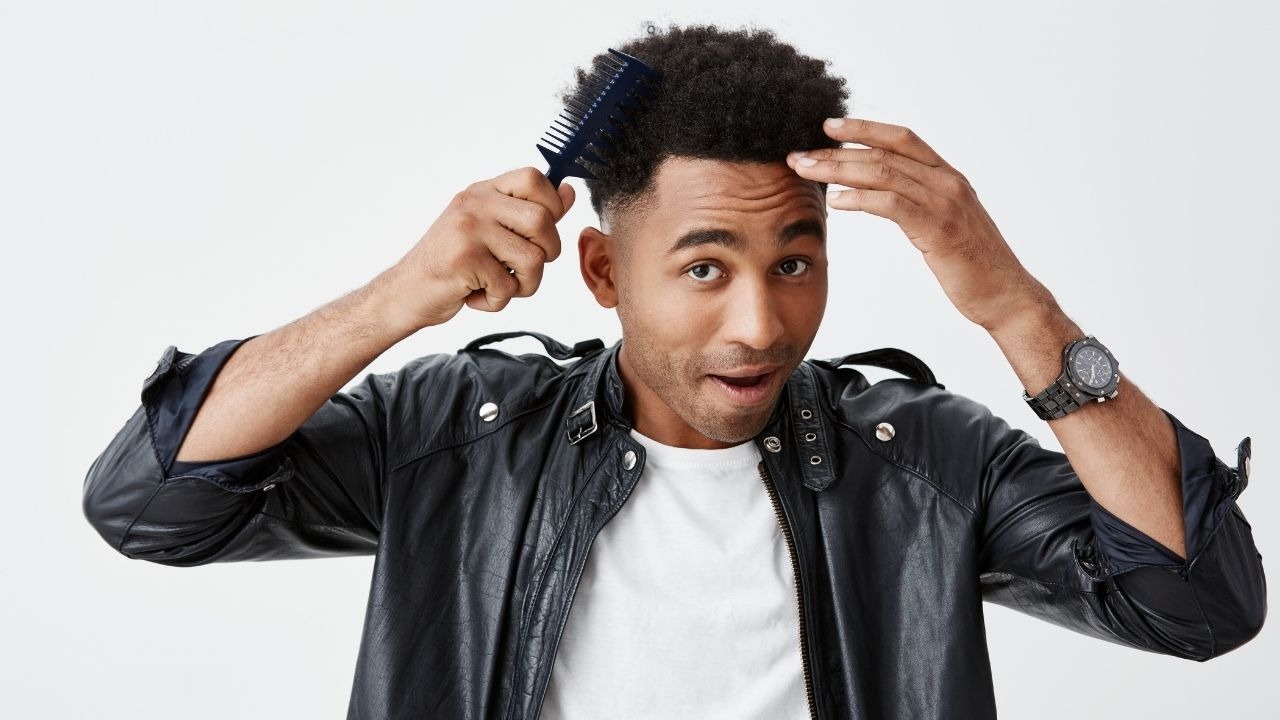

Curly hair men products are the single most important investment a guy with textured hair can make for his daily grooming routine. According to a multinational study published in the Journal of Clinical, Cosmetic and Investigational Dermatology covering 19,461 participants across nine countries, dry hair affects 32.1% of males globally, and damaged hair is reported by 30% of men. For men with curly or coiled textures, those numbers climb even higher because natural scalp oils struggle to travel down a spiraled hair shaft.
The global hair care market was valued at approximately $113.93 billion in 2025 and is projected to reach $216.94 billion by 2034, growing at a CAGR of 7.46% (Fortune Business Insights). Within that market, men’s hair care is expanding at roughly 7.0% CAGR through 2033 (Grand View Research), driven by growing awareness about targeted hair health solutions rather than generic shampoos.
This guide walks you through exactly which curly hair men products you need, which ingredients to prioritize, and how to build a simple daily routine that keeps your curls defined, hydrated, and frizz-free.
Table of Contents
Why Curly Hair Demands Specialized Products
The Science Behind Curl Structure
Every strand of curly hair grows from an angled follicle, creating bends and twists that give curls their distinctive shape. Research from L’Oréal’s global hair classification study, which analyzed hair samples from nearly 2,500 people across 22 countries, identified eight distinct curl categories ranging from barely-there waves to ultra-tight coils (Scientific American). Each category has different hydration and styling needs.
The curved structure means that sebum, the natural oil your scalp produces, moves more slowly down a curled strand than a straight one. The tighter the curl, the slower the oil travels. This biological reality is why standard products designed for straight hair often leave curly-haired men dealing with dryness, brittleness, and uncontrollable frizz.
How Big Is the Curly Hair Population
Researchers estimate that over a third of the world’s population currently has curly hair, and that figure is expected to reach 40% by 2030 (Scientific American / L’Oréal Research). Among people of European descent specifically, about 15% have curly hair and another 40% have wavy hair, according to a genome-wide association study published in the American Journal of Human Genetics. That means more than half the male population has some degree of texture that benefits from curl-specific products.
Five Common Challenges Every Curly-Haired Man Faces
Before selecting products, it helps to understand the specific problems they need to solve. Here are the five issues curly-haired men encounter most frequently.
- Excessive Frizz in Humid Conditions. Curly hair is naturally more porous than straight hair, which means it absorbs moisture from the air rapidly, causing the cuticle to swell and frizz to spike.
- Chronic Dryness and Breakage. Without adequate moisture, curly strands become brittle. The dry and damaged hair segment accounts for 28.44% of the global hair care market, the largest single concern category (Grand View Research).
- Inconsistent Curl Definition. Using the wrong hold level or applying product unevenly leads to some curls forming perfectly while others fall flat.
- Product Buildup and Weighed-Down Texture. Heavy silicones and waxes coat the hair shaft, preventing moisture absorption and making curls look limp over time.
- Tangling and Painful Detangling. The coiled shape of curly hair makes strands interlock easily, and aggressive brushing causes unnecessary breakage.
Essential Curly Hair Men Products by Category
Sulfate-Free Shampoos and Co-Washes
Traditional shampoos rely on sulfates like sodium lauryl sulfate to create lather, but these detergents strip natural oils from curly hair aggressively. Sulfate-free cleansers remove dirt and excess oil without leaving strands parched.
Co-washing, which means using a cleansing conditioner instead of shampoo, has become especially popular among men with tight curl patterns (type 3B and above on the curl scale). This method cleanses gently while depositing moisture at the same time. Men with oilier scalps can alternate between a sulfate-free shampoo twice a week and co-wash on the remaining days.
Deep Conditioners and Leave-In Treatments
Deep conditioners penetrate the hair cortex to repair protein bonds and restore elasticity. Using a deep conditioner once a week dramatically reduces breakage over time. Leave-in conditioners provide lighter, ongoing hydration between wash days and serve as the foundation layer before any styling product.
Look for formulas containing shea butter, argan oil, coconut oil, or aloe vera. These natural ingredients nourish curls without leaving heavy residue that weighs hair down.
Curl Creams and Defining Gels
Curl creams deliver lightweight moisture while enhancing your natural pattern. They work best for men who want a soft, touchable finish without stiffness. Apply a dime-sized amount to damp hair and scrunch upward to encourage curl formation.
Defining gels offer stronger hold for more structured looks. Modern gel formulas have moved far beyond the crunchy, plastic-looking gels of the 1990s. Today’s options dry with a flexible cast that you can scrunch out once hair is fully dry, leaving defined curls with natural movement.
Anti-Frizz Serums and Oils
Lightweight serums seal the hair cuticle and create a barrier against humidity. A few drops applied to the ends of damp hair can keep frizz at bay for an entire day. Avoid heavy silicone-based serums; instead, choose water-soluble or plant-oil-based options that rinse out cleanly.
Ingredient Guide: What to Use and What to Avoid
Not all ingredients are created equal for curly hair. This comparison table breaks down what to look for and what to skip when shopping for curly hair men products.
| Category | Beneficial Ingredients | Ingredients to Avoid |
| Moisturizers | Glycerin, aloe vera, honey, hyaluronic acid | Mineral oil (can clog pores on scalp) |
| Oils and Butters | Argan oil, shea butter, jojoba oil, coconut oil | Petrolatum, heavy waxes |
| Proteins | Hydrolyzed keratin, silk amino acids, wheat protein | Overuse of any protein (causes stiffness) |
| Surfactants | Cocamidopropyl betaine, decyl glucoside | Sodium lauryl sulfate, sodium laureth sulfate |
| Film Formers | Flaxseed gel, polyquaternium-10 | Non-water-soluble silicones (dimethicone, cyclomethicone) |
Building a Daily Curly Hair Routine for Men
Morning Styling Routine
A solid morning routine takes five minutes and sets your curls up for the entire day. Follow these steps in order for the best results.
- Start with freshly washed or dampened hair. If it is a non-wash day, spray a mixture of water and leave-in conditioner to reactivate your curl pattern.
- Apply leave-in conditioner from mid-shaft to ends. Avoid the roots to prevent a greasy look.
- Layer your preferred styling product, whether curl cream, gel, or a combination of both (the LOC or LCG method).
- Use a microfiber towel or cotton t-shirt to scrunch out excess water. Regular terry cloth towels create friction that causes frizz.
- Air dry whenever possible. If you are short on time, use a diffuser attachment on low heat to speed up drying without disrupting your curl pattern.
Nighttime Maintenance
Protecting your curls overnight preserves your style and cuts morning preparation time in half. Switching from a cotton pillowcase to a satin or silk pillowcase reduces friction that causes tangles and frizz while you sleep.
Some men prefer the “pineapple” method, which involves loosely gathering hair on top of the head with a silk scrunchie. In the morning, a quick mist of water mixed with conditioner and a gentle scrunch revives curls without starting from scratch.
How to Choose the Right Products for Your Curl Type
Wavy Hair (Type 2A to 2C)
Wavy hair benefits from lightweight products that enhance texture without dragging waves down. A mousse or light curl cream works better than heavy butters. Shampoo every two to three days to keep waves from going limp.
Curly Hair (Type 3A to 3C)
Medium-weight curl creams paired with a defining gel provide the ideal balance of moisture and hold. Deep condition weekly and consider co-washing between shampoo days to maintain hydration levels.

Coily Hair (Type 4A to 4C)
Coily textures need the most moisture. Rich butters, heavy creams, and oil-based sealants work best. Shampoo once a week at most, and focus on deep conditioning treatments twice a week during dry seasons.
Pro Tips from Industry Experts
The Squish-to-Condish Technique
This technique involves cupping water in your hands and pressing it into conditioner-coated hair, forcing the product deeper into each strand. It dramatically improves moisture retention and curl definition, especially for type 3 and 4 curls.
Avoid Touching Curls While Drying
One of the most common mistakes men make is running their fingers through their hair while it dries. Every touch disrupts the curl clump formation and introduces frizz. Let your curls dry completely before you touch them.
Clarify Monthly
Even with the cleanest products, some buildup accumulates over time. Using a clarifying shampoo once a month resets your hair and allows your regular products to work more effectively.
Final Thoughts
Choosing the right curly hair men products is not about buying the most expensive options on the shelf. It is about understanding your unique curl pattern, knowing which ingredients serve your hair’s needs, and building a simple routine you can actually stick with.
The men’s personal care market is projected to grow from $74.4 billion in 2025 to $129.5 billion by 2035 (Fact.MR), which means product options will only continue expanding. Use the ingredient guide and routine framework in this article as your foundation, and adjust as you discover what works best for your specific texture.
How often should men with curly hair wash their hair?
Most dermatologists recommend washing curly hair two to three times per week with a sulfate-free shampoo. Over-washing strips essential oils and leads to dryness, while under-washing can cause scalp buildup and irritation. Adjust based on your activity level and how oily your scalp gets.
Can I use regular shampoo on curly hair?
You can, but it is not recommended. Regular shampoos often contain sulfates that remove too much natural oil from curly hair. Since curly strands are already prone to dryness, sulfate-free or low-poo formulas are a much better choice.
What is the difference between curl cream and gel?
Curl cream provides moisture and soft definition with a flexible, touchable finish. Gel offers stronger hold and more defined structure. Many men layer both: cream first for moisture, gel on top for hold. This combination is known as the LCG (Leave-in, Cream, Gel) method.
Do curly hair products cause hair loss?
Quality curly hair products do not cause hair loss. However, products containing harsh sulfates, drying alcohols, or heavy silicones can weaken hair over time, leading to breakage that mimics thinning. Stick to gentle, nourishing formulas and avoid pulling or aggressive brushing.
How do I reduce frizz on curly hair?
Frizz happens when the hair cuticle lifts and absorbs excess moisture from the air. To combat it, apply a leave-in conditioner and anti-frizz serum to damp hair, dry with a microfiber towel instead of terry cloth, and avoid touching your hair while it dries. Sleeping on a satin pillowcase also helps significantly.
Are natural or organic curly hair products better?
Natural ingredients like shea butter, aloe vera, and argan oil are excellent for curly hair. However, the label “organic” does not automatically mean better. Focus on ingredient quality and whether the formula is free from sulfates, parabens, and non-water-soluble silicones, rather than marketing buzzwords.