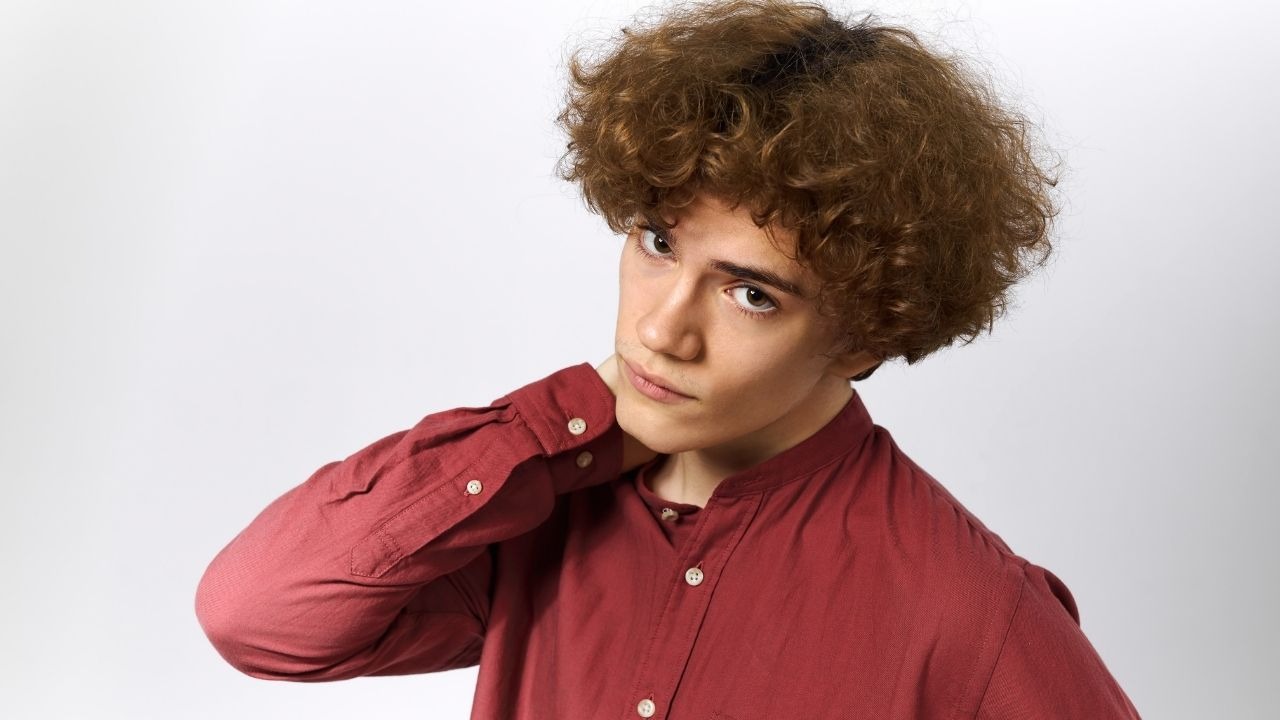

Choosing the best curly haircut for long face shapes comes down to a single principle: build width at the sides and reduce vertical emphasis at the top. A long or oblong face typically measures about 1.5 times taller than it is wide, with a high forehead, narrow cheekbones, and an elongated chin. The right curly style can shift those proportions and create an appearance much closer to the universally flattering oval shape.
Curly hair gives you a built-in advantage for achieving this. Unlike straight hair that falls downward and stretches the face visually, curls expand outward, adding horizontal fullness at the temples, ears, and jawline. Professional stylists who specialize in textured hair consistently recommend curly cuts over straight ones for oblong faces because they offer more sculpting control over where volume falls (Devana Salon).
This guide covers expert-backed haircut recommendations, real data on curl behavior, styling techniques, product suggestions, and common pitfalls. Whether you have loose waves or tight coils, you will find a cut here that flatters your proportions.
Table of Contents
What Makes a Face Shape “Long”
How to Identify an Oblong or Long Face
Pull your hair completely back, look straight into a mirror, and compare two measurements: the vertical distance from your hairline to your chin versus the horizontal distance across your widest cheekbones. If the vertical measurement clearly exceeds the horizontal one, you have a long face shape. Common secondary features include a high or prominent forehead, a narrow jawline, and cheekbones that sit relatively flat rather than projecting outward (Beardburys).
A quick at-home method is to trace the outline of your face onto a mirror using a washable marker. If the shape you trace resembles a tall rectangle more than a circle or square, you are working with elongated proportions (CurlsQueen).
Why Proportions Matter More Than Trends
Research in facial perception consistently shows that humans instinctively perceive faces closer to an oval shape as more balanced and attractive. The practical takeaway for anyone with a longer face is straightforward: pick cuts that widen the visual midpoint and minimize extra height.
Curly hair specialists note that the ideal head proportions are roughly a 5:7 width-to-height ratio when viewed from the front. Every decision your stylist makes about layer placement, bang length, and volume distribution should push your silhouette toward this ratio rather than away from it (Devana Salon).
This matters more than ever in 2026 because the trend cycle has shifted toward customization. Stylists now prioritize face-shape analysis over copying celebrity looks, and the most flattering cut for your friend’s round face could be the worst possible choice for your long one.
Why Curly Hair Gives Long Faces an Advantage
Straight hair follows gravity. It falls directly downward, which pulls the eye along the vertical axis of the face. For someone whose face is already longer than average, this creates an elongating curtain effect that emphasizes the very proportions they want to minimize.
Curly hair does the opposite. Regardless of whether you have loose 2B waves or tight 4C coils, your texture naturally expands outward from the scalp. That horizontal expansion acts as a built-in width booster, pulling the visual center of the face toward the cheekbones rather than the forehead or chin.
This is why professional stylists prefer working with natural curl texture rather than straightening it when shaping a cut for elongated faces. Curls give the stylist more sculpting flexibility. They can concentrate volume at ear level, build roundness through the sides, and create a wider silhouette at the exact points where a long face needs it most (CurlsQueen).
One important factor to understand is curl shrinkage, which is the difference between your hair’s stretched length and its natural dry length. Shrinkage varies significantly by curl type: loose waves (2A–2C) typically shrink by 5 to 20 percent, medium curls (3A–3B) by 20 to 40 percent, tight curls (3C–4A) by 40 to 60 percent, and coily textures (4B–4C) can shrink by 60 to 75 percent or more (Only Curls). This shrinkage data is critical because it directly affects where your cut lands once it dries. A skilled stylist always cuts curly hair dry to account for this spring-up effect.
Top 6 Curly Haircuts That Balance a Long Face
Curly Shag With Side Volume
The curly shag is one of the most effective cuts for breaking up vertical length. It features choppy, disconnected layers that start around the cheekbones and build outward, producing a rounded silhouette with plenty of movement. The shorter layers near the crown prevent excess height while the side layers add the horizontal width that a long face requires.
This style works particularly well on curl patterns between 2C and 3C because the texture holds the layered shape without needing heavy product. Ask your stylist for internal layers that concentrate bulk at ear level and below. Make sure to specify that you want minimal lift at the crown and maximum fullness through the temples and sides.
How to Ask Your Barber or Stylist
Request a “mid-length shag with width-building layers.” Bring two or three reference photos showing a rounded overall silhouette rather than a triangular one. Mention your face shape directly a stylist who asks questions about your proportions before picking up the scissors is the kind of professional you want in your corner (Finest of the Fine).
Chin-Length Curly Bob
A curly bob that ends at or just below the chin creates a strong horizontal line across the widest part of the face. This visual trick shortens the appearance of a longer face while the curls themselves fill out the sides with natural bounce. The chin-length landing point is deliberate: it draws the eye horizontally and creates a visual “stop” that counters vertical pull.
Experts recommend concentrating layers from the chin downward so volume builds around the jawline. This is especially flattering for people whose elongated face also includes a narrow chin, as the curls add softness and dimension exactly where it is needed. For tighter curls (3B and above), remember that shrinkage will lift the bob higher than expected, so discuss dry-cut length carefully with your stylist (CurlsQueen).
Layered Curls With Full Bangs
Nothing shortens a long forehead faster than a set of full, curly bangs. Cut horizontally across the forehead at eyebrow level, curly bangs instantly reduce the visible face length by covering the top third. They create a new visual “top line” for the face, making it appear shorter and more balanced.
The key is always cutting curly bangs dry and in their natural curl pattern. Because curls spring upward when they dry, wet-cutting bangs almost guarantees they will land several centimeters shorter than intended. Pair the bangs with medium-length layers that hit between the chin and shoulders, and you create a balanced frame that adds width while reducing height.
Maintenance Tip
Curly bangs require trimming every two to three weeks to hold their shape more frequently than the rest of the cut. Between trims, a small amount of curl-defining cream applied with your fingers each morning keeps them looking structured rather than unruly. Sleep in a silk or satin bonnet to prevent overnight flattening.
Curly Wolf Cut
The wolf cut has become one of the most requested styles for elongated faces in 2026. It blends a shag with subtle mullet-like length at the back, offering the best of both worlds: shorter face-framing layers at the front for width, and longer back layers for versatility and movement.
This style thrives on natural texture and looks especially striking on curl patterns between 2C and 3B. It is low-maintenance, air-dry friendly, and creates a lived-in aesthetic that softens angular features. A 2026 trend report from multiple grooming publications ranked the wolf cut among the top three most-searched curly styles globally, driven largely by its ability to work across different face shapes with minor adjustments (StyleCraze).
For a long face specifically, ask your stylist to keep the face-framing pieces chin-length or shorter and to build volume at the ears. A volumizing mousse applied at the roots before diffusing can enhance the rounded shape further.
Textured Crop With Curly Fringe
For those who prefer a shorter cut, a textured crop with a forward-falling curly fringe delivers strong results. The fringe covers the forehead and visually reduces face length, while the cropped sides maintain a clean structure.
This is one of the best curly haircut for long face options for men specifically, as it pairs naturally with low or mid fades. High fades should be avoided entirely because they remove volume from the sides and add visual height, making a long face appear even longer. A low fade retains some fullness at the temples and creates a gentler transition that supports the width your face needs (Finest of the Fine).
For men with tighter curls (3C–4B), this cut also has a practical benefit: shorter sides mean less daily maintenance, while the textured top stays defined with a single application of lightweight curl cream.
Medium-Length Curls With a Deep Side Part
A deep side part with curls falling to one side introduces asymmetry that breaks up the vertical line of a long face. The weight of the curls shifts to one side, creating diagonal visual movement rather than a straight-down pull. This diagonal line is one of the most powerful tools in a stylist’s arsenal for reshaping perceived proportions.
This style works across all curl types and hair densities. Thicker curls create a dramatic sweep, while finer curls produce a softer, more subtle offset. Either way, the asymmetry is naturally flattering for oblong proportions.
Celebrity stylist Bill Angst, in a consultation feature for The Glow Memo, specifically recommended the side part with longer, sweeping curls as one of his top picks for clients with long faces and naturally curly hair (The Glow Memo).
How to Style Curly Hair for Width Instead of Height
Diffusing Horizontally
How you dry your curls matters as much as how they are cut. When using a diffuser, tilt your head to the side and direct airflow horizontally rather than upward. This encourages curls to expand outward instead of lifting at the roots, which would add the height you are trying to avoid.
Set your dryer to low heat and medium speed. Cup sections of hair in the diffuser bowl and hold them at the sides of your head for 20 to 30 seconds at a time. Avoid flipping your head upside down entirely, as this technique lifts the crown volume first and can exaggerate a long face.
The Three-Step Product Layering Method
Start with a leave-in conditioner on damp hair for moisture. Follow it with a curl-defining cream to shape each curl cluster. Finish with a lightweight gel or mousse for hold throughout the day. This layering approach gives you precise control over where your volume builds.
For long face shapes specifically, concentrate product application at the sides of the head rather than the crown. When scrunching, focus your hands at ear level and squeeze inward and upward. This directs volume horizontally and supports the overall width that your haircut is designed to create.
Mistakes That Make a Long Face Look Even Longer
Even the best curly haircut for long face shapes can be undermined by poor styling choices. Here are the most common pitfalls:
- Excessive height on top: Pompadours, high quiffs, and volume piled at the crown all add vertical inches. Keep the top relatively flat and shift bulk to the sides.
- Very long one-length hair with no layers: Straight-down curls without face-framing layers create a curtain that emphasizes vertical length. Always request layers.
- High fades or fully shaved sides: Removing all volume at the temples narrows the head visually and makes the face appear taller. Low and mid fades are far more flattering.
- Center parts without bangs: A center part splits the face into two long vertical halves. If you prefer a center part, pair it with bangs or strong face-framing layers to interrupt the length.
Best Products by Curl Type
| Curl Type | Best Product Type | Application Tip |
| 2B–2C (Wavy) | Lightweight mousse or sea salt spray | Apply to damp hair, scrunch upward, air dry |
| 3A–3B (Curly) | Curl-defining cream + light-hold gel | Rake through sections, diffuse on low heat |
| 3C–4A (Tight Curls) | Rich leave-in conditioner + curl butter | Apply generously in sections, finger-coil for definition |
| 4B–4C (Coils) | Heavy cream + oil sealant | LOC method (Liquid, Oil, Cream), twist or braid-out for stretch |
Across all curl types, one practical tip applies universally to long face shapes: apply more product at the sides of your head and less at the crown. This simple distribution shift reinforces horizontal volume throughout the day and prevents the top from puffing upward.
What Professional Stylists Recommend
The Dry-Cutting Advantage
Curly hair specialist salons, including DevaCurl-certified studios and salons following the Curly Girl Method, train their stylists to cut each curl individually while dry. This technique exists for a critical reason: curl shrinkage can reduce visible length by anywhere from 20 percent on loose waves to 75 percent or more on tight coils (Carol’s Daughter). Without dry cutting, a wet-cut style may look balanced in the salon chair but spring up to an entirely different shape once the hair dries.
For a long face, this is especially important. If shrinkage lifts the sides too much, you lose the horizontal width that the cut was designed to create. A stylist who cuts dry can see exactly how each curl lands and adjust in real time.
Finding the Right Stylist
Look for a stylist who does three things during your consultation: asks about your face shape before suggesting a cut, insists on cutting your curls dry, and discusses where volume should and should not fall based on your proportions. If a stylist reaches for the scissors without asking any of these questions, that is a signal to keep looking.
Ultimately, finding the best curly haircut for long face proportions comes down to working with someone who understands both curl behavior and facial geometry. The two skills are equally important, and a stylist who excels at one but ignores the other will consistently deliver results that look good in the chair but fall apart at home.
The Role of Regular Maintenance
Most curly hair experts recommend trimming every 8 to 12 weeks for the overall shape. Bangs require more frequent attention every 2 to 3 weeks. Regular trims are not just about removing split ends. They are about preventing the style from growing out in ways that shift volume upward and away from the sides where a long face needs it most.
Keyword Clusters and Related Topics
People searching for curly haircuts for elongated faces frequently also explore these connected topics:
- Curly hairstyles for oblong face shapes: the oblong face is closely related to the long face and benefits from identical width-adding techniques including side volume, bangs, and layered shag cuts.
- Face-framing layers for curly hair: layers that start at the cheekbones are the single most versatile tool for balancing any face that is longer than it is wide.
- Curly bangs for high forehead: bangs reduce visible forehead space by creating a new visual top line, and curly textures hold bang shapes better than straight hair.
- Curly bob for narrow face: chin-length bobs add horizontal dimension at the jawline, making them ideal for narrow proportions and elongated chin lines.
- Curly shag haircut 2026: the shag remains one of the most requested curly cuts globally this year due to its natural volume distribution and low-maintenance appeal.
- How to style curly hair for your face shape: styling technique matters as much as the cut itself, and face-shape-specific diffusing and product application are essential skills for at-home care.

What is the best curly haircut for long face shapes in 2026?
The curly shag, chin-length curly bob, and layered curls with full bangs are the most flattering choices this year. All three add width at the sides and minimize vertical emphasis, creating the proportional balance that a long face needs. The wolf cut is also an excellent option for those who want a trendier, low-maintenance look.
Should I get bangs if I have a long face and curly hair?
Yes. Curly bangs are one of the most effective tools for shortening a long face visually. They cover the forehead and create a horizontal line that breaks up length. The critical requirement is that they must be dry-cut to account for curl shrinkage otherwise they will spring up shorter than intended.
Are high fades flattering for long faces?
No. High fades remove all volume from the sides and create more vertical emphasis, which makes a long face appear even longer. Low fades and mid fades are far more flattering because they retain some fullness at the temples and support the horizontal width that long faces need.
How often should I trim my curly haircut to keep it balanced?
Plan for a full trim every 8 to 12 weeks. If you wear bangs, those need attention every 2 to 3 weeks. Regular trims prevent the style from growing out in ways that add height or lose the side volume that keeps your proportions balanced.
Does hair length matter for long face shapes?
Medium-length cuts between the chin and shoulders are generally the most flattering range. Very long hair without layers creates a downward-pulling curtain effect that elongates the face further. Very short cuts without fringe or texture may not provide enough width. The sweet spot is chin to shoulder length with face-framing layers.
Can men with curly hair and long faces wear their curls long?
Absolutely. The key is to add layers that build volume at the sides and to pair the length with either a side part or face-framing layers. Avoid slicking hair back or pulling it into a tight topknot, as both of these remove the horizontal fullness that a long face needs.
What products should I avoid if I have a long face?
Avoid volumizing products that target the root area at the crown, such as root-lift sprays and powders. These are designed to add height, which is counterproductive for elongated proportions. Instead, use curl-defining creams and gels applied primarily at the sides of the head to build width where it counts.
Is dry cutting really necessary for curly hair?
For face-shape-specific styling, yes. Curly hair can shrink by 20 to 75 percent depending on curl type (Only Curls). A wet cut cannot account for this shrinkage accurately, which means the finished shape may land in the wrong place once the hair dries. Dry cutting lets the stylist see exactly how each curl falls and adjust the shape in real time.