

Beard styling tips can mean the difference between a scruffy, neglected look and a clean, intentional style that commands attention. According to Statista, the global men’s personal care market reached roughly $90 billion in 2024 and is projected to exceed $115 billion by 2028, reflecting a massive shift in how seriously men now approach grooming.
This guide brings together proven techniques sourced from professional barbers, dermatologists, and grooming brands. Whether you are growing your first beard or refining one you have had for years, these ten expert-backed methods will help you trim, shape, nourish, and maintain facial hair that looks polished every day.
Table of Contents

Why Proper Beard Styling Matters
A well-groomed beard enhances facial symmetry. A landmark study by Dixson et al. (2016) published in the Journal of Evolutionary Biology found that beardedness interacted with facial masculinity to influence attractiveness ratings among 8,520 women with facial hair enhancing long-term attractiveness in particular (Dixson et al., 2016, DOI: 10.1111/jeb.12958).
Beyond aesthetics, consistent beard care protects the skin underneath. Trapped dirt, dead skin cells, and bacteria thrive under neglected facial hair, often causing itchiness, beardruff, and even folliculitis. A structured styling routine prevents these problems before they start.
Know Your Face Shape Before You Trim
The single biggest mistake men make is choosing a beard shape based on trend rather than anatomy. Grooming professionals universally agree that matching your beard contour to your face shape produces the most flattering result.
Quick Face Shape and Beard Pairing Guide
| Face Shape | Best Beard Style | Why It Works |
| Oval | Most styles (short boxed, full beard) | Balanced proportions allow versatility |
| Round | Longer chin, shorter sides | Adds vertical length, slims the face |
| Square | Short stubble or rounded beard | Softens the strong jawline |
| Oblong | Fuller on the sides, shorter on chin | Creates width and balances length |
| Heart / Triangle | Full beard with volume at jaw | Fills the narrow chin area |
Stand in front of a mirror, pull your hair back, and trace the outline of your face with a dry-erase marker on the glass. The shape you see dictates which style will complement your features best.
10 Expert Beard Styling Tips for a Polished Look
1. Invest in the Right Grooming Tools
Quality tools are the foundation of every professional-looking beard. At minimum, you need a sharp pair of barber scissors, an adjustable-length trimmer (brands like Philips Norelco and Wahl are industry staples), a wide-tooth comb, and a boar-bristle brush.
Grand View Research valued the global men’s grooming products market at $202.6 billion in 2022, projecting it to reach $376.4 billion by 2030 at a CAGR of 8.0%. Dull blades tug and split hairs, so replace trimmer heads every 12 to 18 months.
2. Wash Your Beard Properly
Regular shampoo strips natural oils from facial hair. Use a dedicated beard wash two to three times per week. Look for sulfate-free formulas with ingredients like tea tree oil or aloe vera, which cleanse without drying.
On non-wash days, rinse with lukewarm water and pat dry with a towel. Rubbing aggressively causes frizz and breakage.
3. Master the Neckline
A clean neckline is what separates a styled beard from a neglected one. The standard rule among barbers is to place two fingers above your Adam’s apple, then trim everything below that imaginary line. Curve the line upward behind each ear.
Trim the neckline every five to seven days. Letting it grow even slightly beyond this window creates a visibly unkempt appearance.
4. Define Your Cheek Line
Most professionals recommend a natural cheek line. Unless your growth reaches high onto the cheekbones, avoid shaving an artificially straight line across the cheek. Let the natural growth edge serve as the boundary and clean up only the stray hairs above it.
5. Trim Gradually, Never All at Once
Set your trimmer two guard lengths higher than your target. Make a single pass, evaluate, then drop one length and repeat. This prevents the common mistake of over-trimming, which can take weeks to recover from.
A practical tip from master barber Matty Conrad: always trim a dry beard. Wet hair stretches, so cutting when wet often results in a shorter length than intended.
6. Use Beard Oil Daily
Beard oil hydrates both the hair and the skin underneath. Jojoba oil closely mimics the skin’s natural sebum, making it the top carrier oil recommended by dermatologists. Argan oil adds shine and softness, while castor oil is frequently cited in hair-growth studies for its ricinoleic acid content.
Apply four to six drops to your palms, rub together, then work through the beard from root to tip immediately after showering when pores are open.
7. Shape with Beard Balm for Hold
Balm serves a different purpose than oil. It contains beeswax or shea butter, providing light hold to tame flyaways and keep shape throughout the day. Apply a dime-sized amount after oil, using a comb to distribute evenly.
For men with coarse or curly beard hair, balm is especially useful because it smooths the outer layer without stiffness.
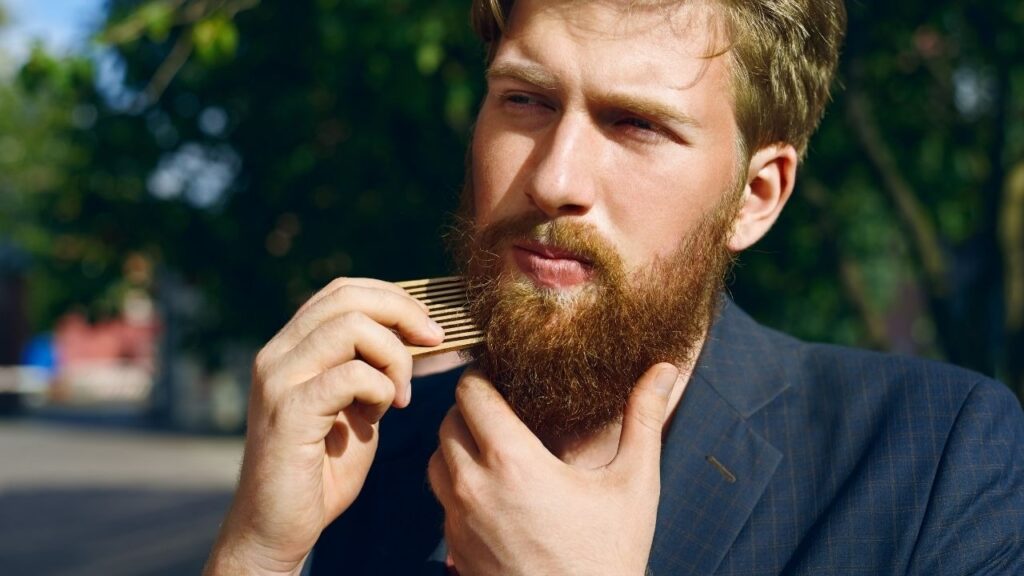
8. Brush and Comb With Purpose
Brushing is not just about detangling. A boar-bristle brush trains hair to grow in a uniform direction and distributes natural oils from root to tip. Brush downward for two to three minutes each morning.
Use a wide-tooth comb after applying products to ensure even coverage. Avoid fine-tooth combs on thick beards, as they pull and break strands.
9. Address Patchiness Strategically
Genetics determine roughly 80 percent of beard density. If patchy areas persist beyond three months of growth, consider these approaches:
- Let it grow longer: surrounding hair often covers thin spots once it reaches two to three inches.
- Derma rolling: a 2013 pilot study by Dhurat et al. in the International Journal of Trichology found that microneedling combined with 5% minoxidil produced a mean hair count increase of 91.4 hairs/cm² versus 22.2 for minoxidil alone over 12 weeks (Dhurat et al., 2013, PMID: 23960389).
- Choose a complementary style: goatees, chin straps, and Van Dyke styles work around thin cheek growth.
10. Get a Professional Lineup Every 4 to 6 Weeks
Even men who maintain their beards at home benefit from periodic barber visits. A professional can correct asymmetry, shape the fade between beard and sideburns, and provide personalized advice based on your growth pattern.
Ask your barber to show you where they are trimming so you can maintain the shape between appointments.
Daily Beard Grooming Routine: Step by Step
- Cleanse: Wash with beard-specific shampoo or rinse with water.
- Pat dry: Gently towel-dry; avoid rubbing.
- Apply beard oil: Work four to six drops from root to tip.
- Apply balm: Use a small amount for hold and shape.
- Brush downward: Train hair direction and distribute product.
- Check edges: Clean up neckline and cheek strays as needed.
This routine takes under five minutes and, performed consistently, produces visible improvements in texture, density appearance, and overall tidiness within two to three weeks.
Common Beard Styling Mistakes to Avoid
Over-Washing
Washing daily strips natural sebum and leads to dry, brittle hair. Two to three washes per week is sufficient for most men.
Ignoring the Skin Beneath
Exfoliate once or twice a week with a gentle scrub to remove dead cells that clog follicles. Healthy skin is the foundation of healthy beard growth.
Using Head-Hair Products on Your Beard
Facial hair has a different texture and structure than scalp hair. Products formulated for head hair often contain silicones that build up on coarser beard strands, causing dullness and flaking.
Trimming When Wet
Wet hair appears longer. Trimming in this state almost always results in cutting more than planned. Always style and trim a fully dry beard.
Nutrition and Lifestyle for Better Beard Growth
External care only goes so far. Internal health directly influences facial hair thickness and speed of growth. A 2019 review by Almohanna et al. published in Dermatology and Therapy examined the relationship between micronutrient deficiencies and hair loss, finding that low levels of iron, vitamin D, zinc, and biotin were associated with various forms of alopecia (Almohanna et al., 2019, DOI: 10.1007/s13555-018-0278-6).
Prioritise protein-rich foods, leafy greens, eggs, and nuts. Hydration matters as well aim for at least two litres of water daily. Adequate sleep (seven to eight hours) supports testosterone regulation, which is directly tied to facial hair density.
How long does it take to grow a full beard?
Most men need two to four months of uninterrupted growth to achieve a full beard. Genetics, age, and hormone levels influence the timeline significantly. Resist the urge to trim or shape during the first four weeks.
Does shaving make a beard grow back thicker?
No. This is a widely believed myth. Shaving cuts the hair at its thickest cross-section, creating a blunt tip that feels coarser. The actual growth rate, thickness, and colour remain unchanged, as confirmed by dermatological research.
Can beard oil fix a patchy beard?
Beard oil moisturises and improves the health of existing hair, but it does not stimulate new follicle growth. For patchiness, microneedling combined with minoxidil has shown more promising clinical results (Dhurat et al., 2013).
How often should I trim my beard?
For a maintained look, trim every one to two weeks. Focus on the neckline, cheek line, and any stray hairs. A full reshape at the barber every four to six weeks keeps the style sharp.
What is the best beard style for a round face?
Styles that add length to the chin while keeping the sides shorter work best. A pointed goatee, ducktail, or extended chin beard creates the illusion of an elongated face shape.
Is beard balm or beard oil better?
They serve different purposes and work best together. Oil hydrates skin and hair; balm provides hold and tames flyaways. Apply oil first, then balm on top for complete coverage.
Final Thoughts
Great beard styling tips always come back to the same fundamentals: know your face shape, use the right tools, keep a consistent grooming routine, and nourish your body from the inside out. No single product or hack replaces patience and daily care.
Start with one or two changes from this guide today. Within a month, the difference in texture, shape, and overall appearance will speak for itself.