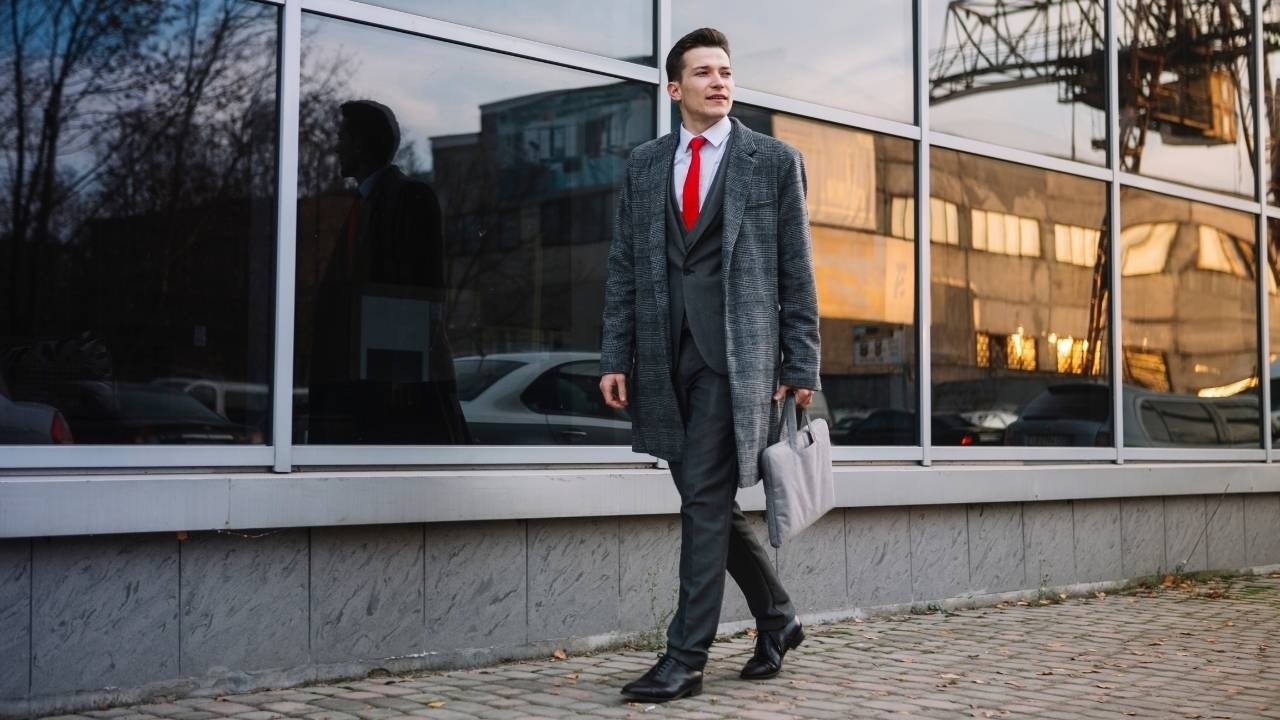

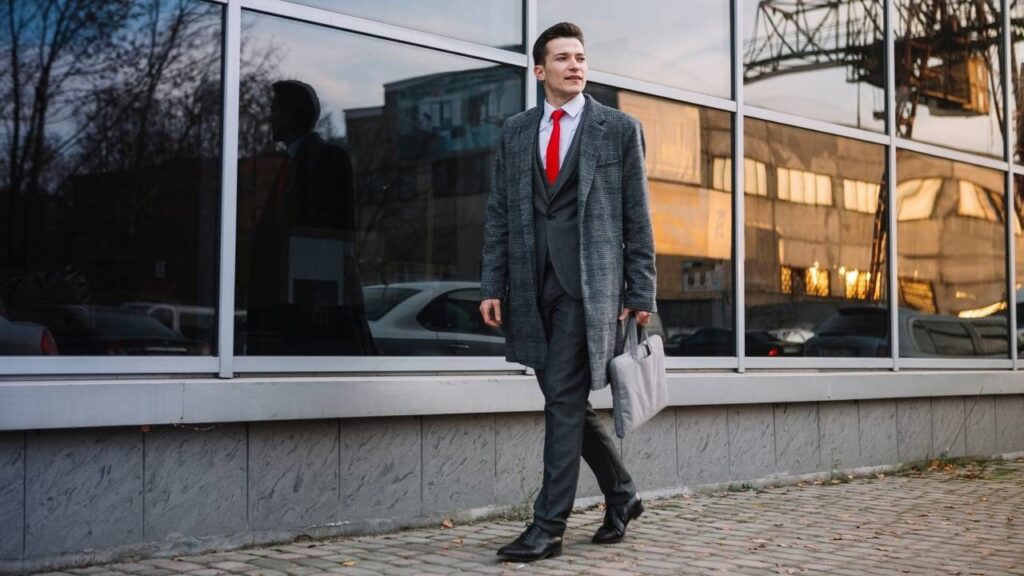
Casual suit trousers have become one of the most important additions to any well-dressed man’s wardrobe this year, blending tailored structure with everyday wearability. The old rules of menswear, stiff suits for the office, joggers for the weekend no longer apply. A new generation of relaxed tailored pants now bridges both worlds effortlessly.
This shift is backed by hard numbers. According to Trendalytics, online searches for “relaxed tailoring” surged by 554% compared to the previous year. Meanwhile, Renub Research projects the global menswear market will grow from $621.94 billion in 2025 to $973.13 billion by 2034, fuelled largely by demand for versatile, comfort-driven clothing.
In this guide, you will learn exactly how to choose, style, and invest in the right pair. Every recommendation is grounded in current industry data and expert analysis from leading fashion authorities.
Table of Contents
What Makes Relaxed Tailored Trousers Different From Regular Dress Plant
Traditional dress pants prioritise stiffness and formality. They feature rigid waistbands, heavy linings, and cuts that restrict movement. Relaxed tailored trousers take the opposite approach while keeping the same polished silhouette.
These modern alternatives use softer fabric blends, semi-elastic waistbands, and tapered leg profiles that move naturally with your body. The result looks just as sharp but feels dramatically more comfortable over a full day of wear.
The Defining Characteristics
What separates a quality pair from ordinary chinos or weekend trousers is the construction. Premium options use a half-lined interior, reinforced seams at stress points, and a mid-rise waist that sits comfortably without a belt. The overall look reads “intentional” rather than “dressed down.”
This distinction matters because it determines where you can actually wear them. A well-made pair transitions seamlessly from a Monday client meeting to a Saturday evening dinner, which is exactly what makes them so practical.
Why This Trend Is Dominating Menswear Right Now
The Post-Pandemic Wardrobe Reset
The pandemic fundamentally changed how men think about getting dressed. After two years of remote work in sweatpants, the return to offices and social events created demand for clothing that delivers polish without sacrificing the comfort people grew accustomed to.
According to a CNN Style report, men are no longer rejecting formality entirely they are reshaping it, borrowing traditional codes selectively and wearing them with ease and individuality. Relaxed tailored trousers sit at the centre of this recalibration.
Industry Data Confirms the Shift
The numbers paint a clear picture. QuartSolutions reports that casual wear and athleisure currently hold 53% of the overall menswear market share, but runway shows for Autumn/Winter 2026 signal a decisive move toward modern tailoring. The sweet spot where comfort meets structure is exactly where these trousers live.
Additionally, Pep & Panache found a 115% increase in tastemaker conversations about relaxed trousers across fashion platforms, confirming that this is not a niche preference but a mainstream movement.
What Top Fashion Houses Are Doing
Major labels are responding to the demand. SkyQuest data shows that Zegna Group’s “quiet luxury” menswear products saw a 20% revenue increase, reaching $1.2 billion across its brand portfolio. Designers like Armani and Zegna are now favouring fluid drapes and softer constructions over rigid tailoring in their mainline collections.
At Pitti Uomo the industry’s most influential menswear trade show guest designers Hed Mayner and Soshi Otsuki both showcased sharp, modern tailoring that deliberately avoids the stiffness of traditional suits.
Choosing the Right Fabric for Every Season
Fabric selection determines everything: comfort, drape, breathability, and how long your trousers last. Here is a practical breakdown based on climate and use case.
| Fabric | Best Season | Key Benefit | Watch Out For |
| Cotton-blend twill | Spring / Autumn | Durable, holds shape well | Can feel heavy in heat |
| Linen mix (55/45) | Summer | Maximum breathability | Wrinkles easily |
| Lightweight wool | Year-round | Temperature regulating, drapes beautifully | Requires careful laundering |
| Stretch cotton | Year-round | Excellent mobility, easy care | May lose shape after many washes |
| Wool-polyester blend | Winter | Wrinkle-resistant, affordable | Less breathable than pure wool |
Finding the Perfect Fit for Your Body Type
Slim and Athletic Builds
Tapered cuts with a medium rise work best here. The taper accentuates an athletic frame without clinging too tightly. Avoid ultra-skinny fits they restrict movement and create an unbalanced silhouette when paired with structured upper-body garments.
Average and Medium Builds
A regular tapered fit with a standard rise offers the most flattering proportions. Look for trousers that sit at the natural waist and have a clean break at the ankle. This classic profile works across virtually every styling scenario.
Larger and Broader Builds
Straight-leg or relaxed-tapered options provide more room through the thigh and knee without looking baggy. A slightly higher rise helps the trouser sit more comfortably and creates a longer, leaner visual line.
The Ankle Rule
Regardless of body type, the trouser hem should sit cleanly at the top of your shoe with no more than a slight break. Excessive pooling at the ankle cheapens the look instantly. If your off-the-rack pair is too long, a simple hem alteration (typically under $15) makes a dramatic difference.
How to Style Relaxed Tailored Trousers for Every Occasion
Business Casual and the Modern Office
Pair your trousers with a crisp Oxford shirt, leather loafers, and an unstructured blazer in a complementary tone. Navy trousers with a light blue shirt and tan loafers is a combination that works in almost any professional environment. Keep accessories minimal a quality watch and a slim leather belt are all you need.
This approach delivers what Hidalgo Brothers describe as the most practical tailoring trend of recent years: buying better, wearing more, and styling with restraint.
Weekend Outings and Casual Gatherings
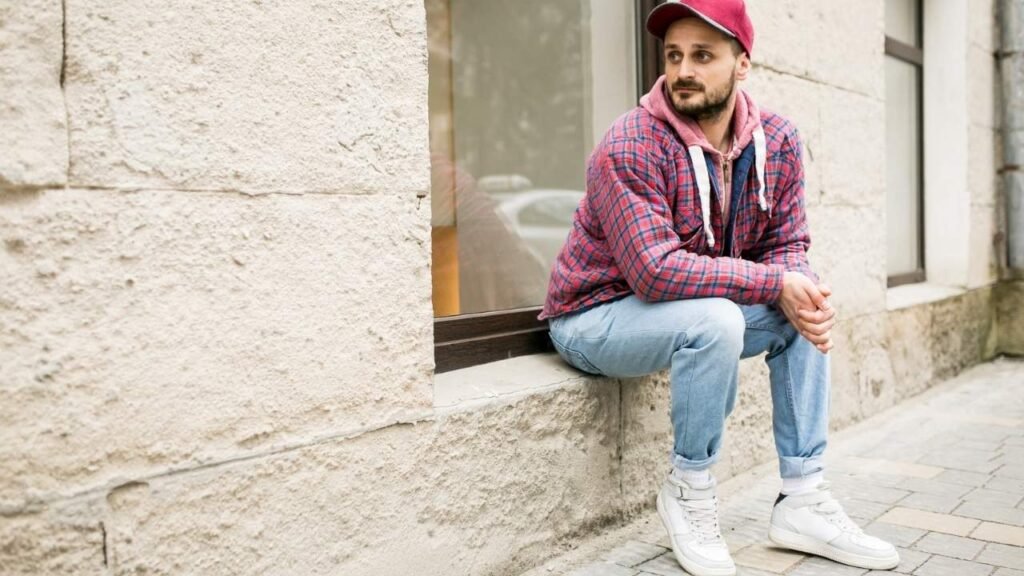
This is where the versatility becomes most apparent. Swap the Oxford for a fitted crew-neck t-shirt or a relaxed linen shirt. Add clean white leather sneakers or suede desert boots. The trouser’s tailored silhouette elevates these casual pieces without making the outfit feel overdressed.
For warmer months, roll the cuffs once to expose the ankle and pair with canvas slip-ons. It is a simple detail that instantly makes the look feel more seasonal and intentional.
Evening and Semi-Formal Events
Opt for a darker shade charcoal, deep navy, or black and pair with a merino wool turtleneck or a slim-fit polo. Monk-strap shoes or polished Chelsea boots complete the look. A minimal watch and no visible belt create a sleek, uninterrupted line from waist to shoe.
Travel and Transit
Wrinkle-resistant fabric blends make casual suit trousers ideal for long flights and transit days. Pair with a zip-up knit jacket and comfortable loafers. You will arrive looking polished enough for a dinner reservation without needing to change.
Common Styling Mistakes That Ruin the Look
Wearing the Wrong Shoe
Chunky athletic trainers clash with the refined lines of tailored trousers. Stick to sleek-soled footwear, minimalist sneakers, loafers, or boots with a clean profile. The shoe should complement the trouser’s polish, not fight against it.
Ignoring Proportion
Oversized hoodies or boxy graphic tees paired with tapered trousers create an unbalanced silhouette. Your upper body garment should be relatively fitted or structured to match the trouser’s clean lines. When in doubt, a tucked-in shirt with a simple belt resolves most proportion issues instantly.
Choosing Price Over Quality
Budget synthetic blends wrinkle within hours, lack breathability, and lose shape after a few washes. A single quality pair in a versatile colour will outperform three cheap alternatives over the course of a year. Think of it as cost-per-wear: a $120 pair worn 80 times costs $1.50 per wear, while a $40 pair that degrades after 15 wears costs $2.67.
Smart Buying Guide: What to Look for Before You Purchase
- Check the fabric composition label. Aim for at least 95% natural fibre content (cotton, wool, or linen) with a small percentage of elastane for stretch. Avoid anything with more than 30% polyester.
- Test the waistband flexibility. Semi-elastic waistbands hidden beneath a traditional closure offer the best balance of comfort and appearance. Fully elastic waistbands can look too casual for smart settings.
- Examine the stitching at seams and pockets. Reinforced stitching at stress points (inner thigh, rear pockets, waistband join) is the clearest indicator of durability.
- Try them with your actual shoes. The trouser-to-shoe transition is the most visible line in any outfit. Always check length and break with the footwear you plan to wear most often.
- Start with a neutral colour. Navy, charcoal grey, or stone/beige will cover the widest range of outfit combinations. You can branch into olive, burgundy, or cream once you have your core pair established.
Colour Selection and Wardrobe Integration
The Three Essential Neutrals
Navy is the single most versatile option. It pairs with white, grey, cream, and most earth tones effortlessly. Charcoal grey offers similar range with a slightly more formal edge. Stone or beige works best in spring and summer, particularly with white sneakers and linen shirts.
Expanding Beyond Neutrals
Once your core colours are covered, olive green and burgundy offer excellent seasonal variety. Olive pairs beautifully with cream and tan during autumn. Burgundy adds richness to winter outfits when combined with navy or black upper layers.
A Practical Capsule Approach
With just three pairs navy, charcoal, and stone you can build roughly 15 to 20 distinct outfits by rotating your shirts, knitwear, and footwear. This efficiency is exactly why style advisors and fashion editors consistently recommend relaxed tailored pants as foundational wardrobe pieces.
Care and Maintenance Tips to Extend Their Lifespan
Machine-wash cotton blends on a cold gentle cycle and hang to dry. Avoid tumble drying, which causes shrinkage and fabric degradation. For wool blends, dry cleaning every four to five wears is ideal, with spot-cleaning in between.
Store trousers on a clamp hanger rather than folding them. This prevents creasing along the thigh and preserves the fabric’s drape over time. A quick steam before wearing removes any residual wrinkles far more gently than a hot iron.
Final Thoughts: A Future-Proof Wardrobe Investment
The data and industry direction are clear. Relaxed tailoring is not a passing trend it represents a permanent evolution in how men dress for the real world. With the menswear market projected to nearly double over the next decade and online interest in comfortable tailored clothing surging by triple digits, investing in quality smart-casual trousers is one of the most practical wardrobe decisions you can make.
Start with a single pair in navy or charcoal. Wear it to the office on Monday, to dinner on Friday, and while travelling on Sunday. Once you experience how one well-chosen piece simplifies your wardrobe while elevating every outfit, the value becomes immediately obvious.
The best-dressed men in 2026 are not choosing between comfort and style. They are choosing both and their trousers are proving it.
What exactly are casual suit trousers?
They are tailored bottoms that combine the structured silhouette of traditional dress pants with relaxed elements like softer fabrics, elastic waistbands, and looser cuts. They bridge the gap between formal trousers and everyday casual wear, making them suitable for a wide range of occasions.
Can you wear relaxed tailored trousers to the office?
Absolutely. Pair them with a button-down shirt, leather loafers, and a structured blazer in neutral tones like navy or charcoal. This combination delivers a polished business-casual look that is appropriate in most modern workplaces.
What fabrics work best for smart casual trousers?
Cotton-blend twills, lightweight wool, and linen mixes offer the best combination of breathability, comfort, and structure. For year-round versatility, a lightweight wool or cotton-elastane blend with at least 3% stretch is the safest choice.
How do relaxed tailored trousers differ from chinos?
Chinos are purely casual and typically use a single-layer cotton construction. Relaxed tailored trousers feature a more refined cut, higher-quality fabric blends, and design elements borrowed from formal suit trousers such as interior lining, reinforced seams, and a more structured waistband making them appropriate for smart-casual and semi-formal settings.
Are tapered or straight-leg styles better?
Tapered cuts tend to flatter the widest range of body types and align with current menswear trends. Straight-leg styles work particularly well for taller or broader frames and for achieving a more classic or vintage-inspired aesthetic.
What shoes pair well with relaxed tailored trousers?
For casual settings, clean white sneakers or suede desert boots work perfectly. For the office or evening events, leather loafers, monk-strap shoes, or polished Chelsea boots complement the trouser’s refined silhouette.
How much should you spend on a quality pair?
A good-quality pair typically costs between $80 and $200. At this price range, you get durable natural-fibre blends, reinforced construction, and a cut that holds its shape over dozens of wears. Spending less often results in synthetic blends that wrinkle quickly and degrade within months.
What is the best first colour to buy?
Navy is the most versatile starting point. It pairs naturally with white, grey, cream, and earth tones, and works across both professional and casual contexts. Charcoal grey is an equally strong alternative if your wardrobe leans toward cooler tones.